Small bay industrial is having a moment. But the developers succeeding consistently in this space understand something others often learn the hard way: the success of these projects is usually determined long before construction begins.
After conversations at the Small Bay Summit, one theme came up repeatedly – getting deals to pencil remains the biggest challenge. Rising land costs, tighter sites, and evolving tenant expectations are forcing developers to take a far more disciplined approach from the start.
A Hot Market with Real Challenges
There’s a reason small bay continues to attract attention. In many markets, there hasn’t been meaningful Class A small bay product delivered in decades. That lack of supply has created an opportunity to bring modern, functional space to underserved tenants.
But small bay is not an easy product type to execute.
Infill land is limited and expensive. Unlike bulk distribution projects, small bay developments also require significantly more upfront build-out to deliver spaces that are move-in ready from day one. Offices, restrooms, demising walls, and finished suites are often expected, not upgrades added later.
That changes the economics of the deal early.
Why Deals Struggle to Pencil
Demand typically isn’t the problem. Feasibility is.
As Tyler Bateh explains:
“When you stress-test a development deal today, you’re stacking hard costs, soft costs, land basis, and carry – and then you hold that against achievable rents in the current market. Often, that math doesn’t work. The yield-on-cost just isn’t there.”
With larger speculative warehouses, developers can often deliver a shell building and complete tenant improvements later. Small bay doesn’t provide the same flexibility. Tenants expect functional, ready-to-occupy space immediately, which means more of the cost burden exists upfront.
That leaves less room for error and fewer opportunities to recover once the project is underway.
The Cost Drivers Developers Often Underestimate
One of the most overlooked aspects of small bay development is how heavily design decisions influence cost.
Smaller suites may support higher rental rates, but they also increase complexity. More demising walls. More offices. More utilities and infrastructure. More storefronts and entries. Those costs add up quickly.
The challenge becomes finding the right balance between rent potential and construction cost.
Too often, those conversations happen after the land is already under contract and key assumptions are locked in. At that point, flexibility becomes limited and value engineering turns reactive instead of strategic.
Why Early Due Diligence Matters
The strongest projects start with clarity early in the process. That means understanding site constraints, achievable density, utility requirements, and realistic construction costs before fully committing to a deal.
Site conditions can change the economics quickly. Environmental challenges, stormwater requirements, municipal regulations, utility limitations, and inefficient site geometry can all reduce what is ultimately buildable or leasable.
Without that visibility upfront, developers risk underwriting deals based on incomplete information.
Bringing design, construction, and development perspectives together early creates a valuable feedback loop. Teams can test layouts, validate assumptions, and identify issues before they become costly problems later.
Site and Design: Where Deals Are Won
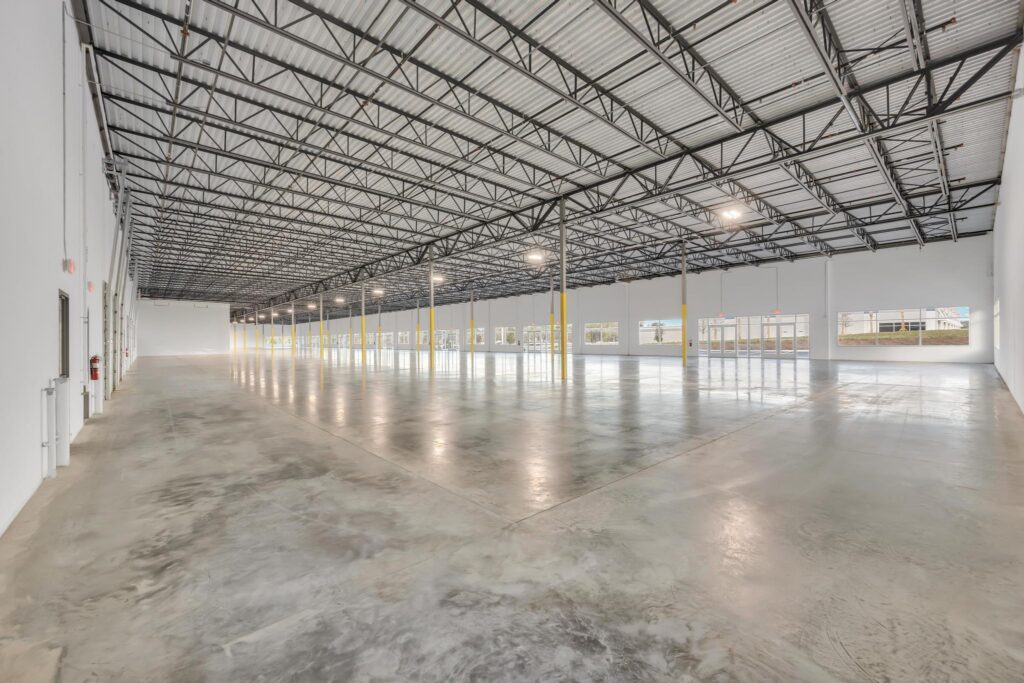
Small bay industrial is not simply a smaller version of big-box distribution. It’s an entirely different product type.
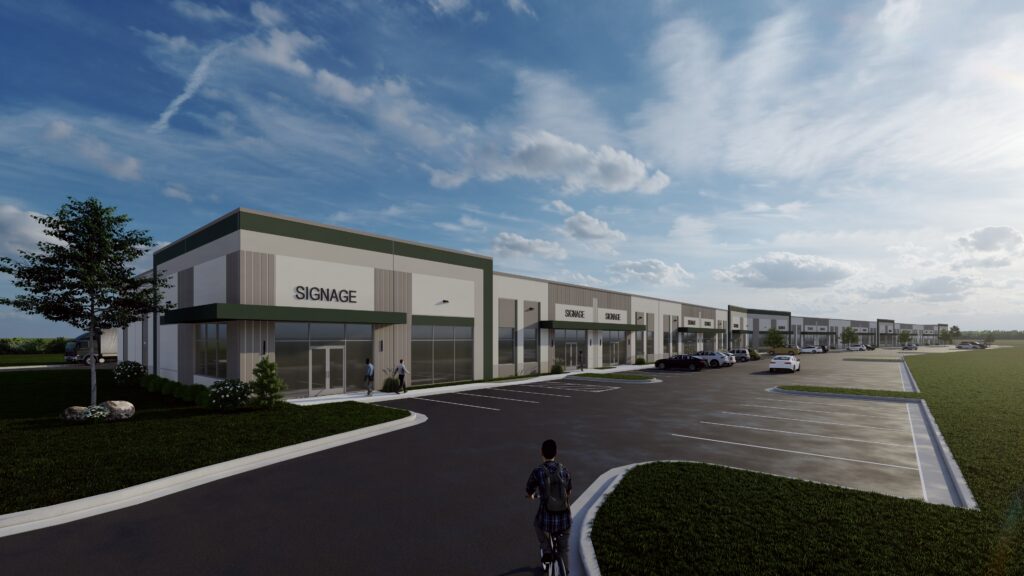
Shallower building depths, lower clear heights, more grade-level access, and increased tenant turnover all create different design priorities. These buildings are often serving service-oriented tenants who value functionality, accessibility, and proximity to customers more than large-scale distribution efficiency.
That makes site layout critical.
Not every site works for small bay. Site geometry, access points, circulation, parking, and building orientation all directly impact efficiency and the ability to lease. A poor layout can reduce rentable square footage and increase costs. A well-planned site can maximize usable space while creating a product that leases faster and performs better over time.
The Value of Early Collaboration
In a product type with tighter margins and more moving parts, early collaboration can make a significant difference.
A design-build approach brings cost, constructability, and schedule insight into the conversation from the beginning. Instead of relying on assumptions, developers gain a clearer understanding of what it will actually take to make the deal successful.
As Bateh notes, the value of early involvement is often less about construction and more about helping developers make informed decisions early: “Our goal is simple: be involved early enough to matter. That means either helping you structure a deal that works, or killing a bad deal early so you can redeploy your time and capital toward something that does.”
Managing Risk in a Tenant-Driven Market
At the end of the day, small bay remains a tenant-driven investment.
Every deal depends heavily on rental assumptions, and even small gaps between projected and achievable rents can significantly impact returns.
That’s why understanding the local market matters just as much as execution. Developers need to study comparable product, work closely with brokers, and understand tenant demand at a hyper-local level.
Location also plays a major role.
Unlike bulk distribution, which prioritizes interstate access and regional logistics, small bay often performs best closer to rooftops, labor pools, and service corridors. Proximity to customers and population centers frequently drives leasing success.
What’s Next for Small Bay
The small bay sector will continue evolving as more developers and institutional capital move into the space. What was once considered a niche industrial product is quickly becoming a more established part of the market.
As competition increases, disciplined planning and execution will matter even more.
One Key Takeaway
Small bay offers strong long-term potential, but it rewards developers who approach it strategically from the beginning.
Understanding the site, the costs, and the realities of the market early is what separates successful projects from the rest. In a product type where so much is decided upfront, the right insight at the right time can make all the difference.